
Expat guide · updated October 2026
Buying a house in Dordrecht as an expat
Prices compared with Rotterdam, buying costs, the Dutch buying process and bidding, explained in plain English by a local registered valuer and buying agent.
€391,755Average sale price in 2025 (CBS)
About 16 minutesBy train to Rotterdam Blaak
2% transfer taxOn a home you live in yourself
3 daysStatutory cooling-off period
By R.A. (Rob) Veth RM RT · updated 18 October 2026
The short answer
Why expats look at Dordrecht
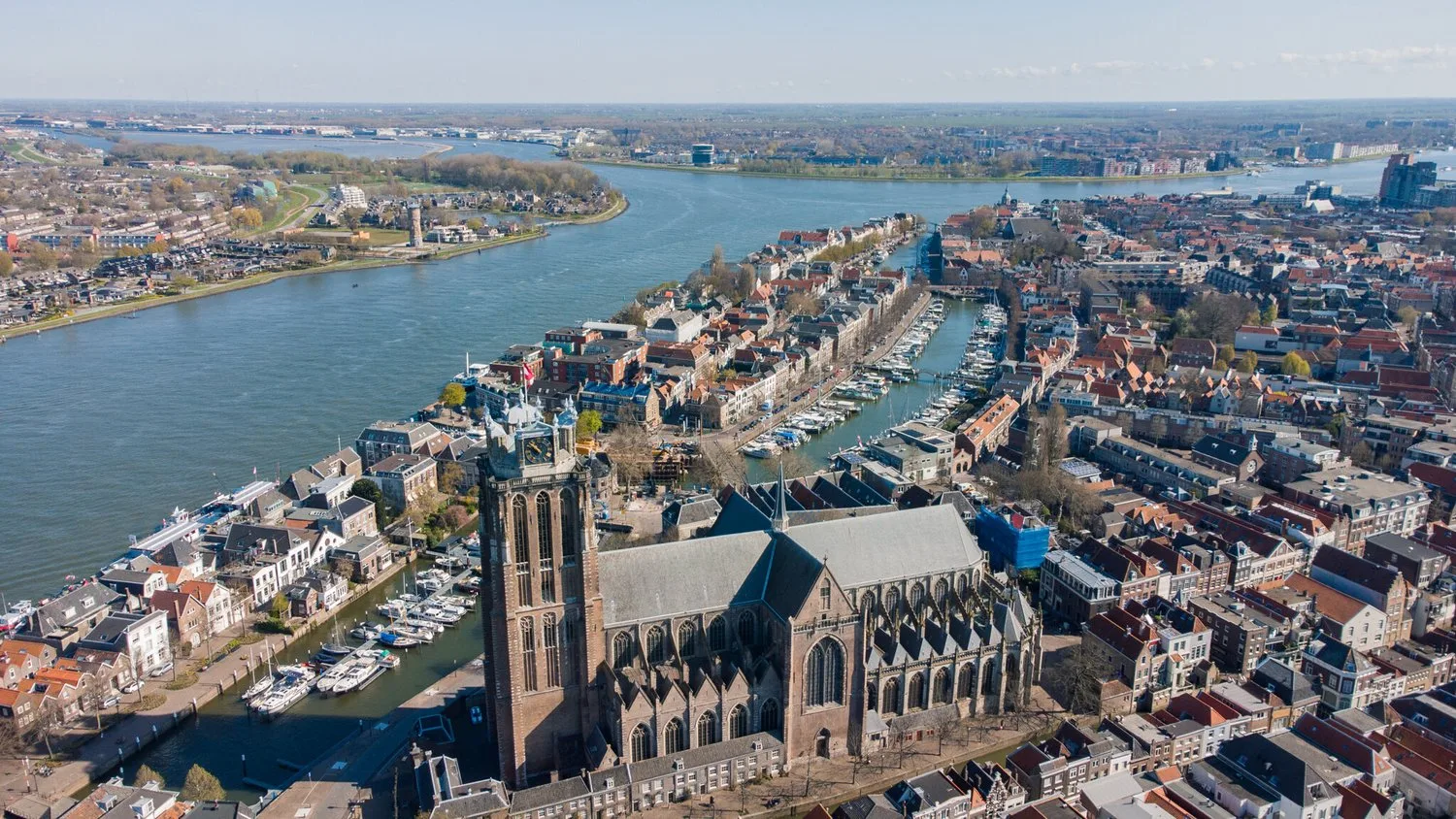
Dordrecht is a historic river city about 20 km south-east of Rotterdam. In 2025 an existing home in Dordrecht sold for €391,755 on average, compared with €414,579 in Rotterdam and €479,527 across the Netherlands. The train to Rotterdam Blaak takes about 16 minutes.
As an expat you buy through the standard Dutch process: viewing, offer, purchase contract, mortgage and transfer at the notary. Non-Dutch nationals can own property here, but the steps, documents and terms are unfamiliar to most newcomers. This guide explains what to expect, what it costs and where an independent buying agent adds value.
Prices in 2025
House prices in Dordrecht compared with Rotterdam
The average sale price of existing homes bought by private buyers in 2025, according to CBS StatLine (table 83625NED):
- Dordrecht
- €391,755
- Zwijndrecht
- €408,715
- Papendrecht
- €387,172
- Hendrik-Ido-Ambacht
- €490,111
- Ridderkerk
- €428,160
- Barendrecht
- €547,450
- Rotterdam
- €414,579
- Netherlands
- €479,527
On these averages Dordrecht is about 5.5% cheaper than Rotterdam. Treat that as a starting point rather than a price guide: an average reflects the mix of homes that happened to sell, from city-centre apartments to detached family houses.
Where to buy
What to check in different parts of Dordrecht and Zwijndrecht
Dordrecht has very different housing within a few kilometres. The questions worth asking depend on the type of home and the neighbourhood.
Historic Dordrecht
Binnenstad and the 19th-century Schil
Character homes in and around the old town. Some streets are a protected townscape and many buildings are monuments, so check the status of the specific address. The municipality’s foundation programme covers the 19th-century Schil, Oud-Krispijn, Nieuw-Krispijn and Reeland, which makes the foundation a standard question there.
Family homes
Dubbeldam, Stadspolders and Sterrenburg
Popular with families looking for a garden and space. Here the construction period, maintenance, energy label, extensions and the plot usually say more about value than the street name. Compare a house with recent sales of truly similar homes nearby.
Apartments
Owners’ associations (VvE)
For any apartment, including newer buildings such as those at Stadswerven, ask for the VvE’s reserves, the long-term maintenance plan (MJOP) and recent meeting minutes. They show what you will contribute and which major works are planned.
Just across the Oude Maas, Zwijndrecht offers districts such as Walburg, Nederhoven, Kort Ambacht and Heer Oudelands Ambacht. Taxcasa guides buyers there too; the buying agent service covers the whole Drechtsteden region.
Step by step
How buying a house in the Netherlands works
The Dutch process moves quickly once you make an offer, so prepare the financial side first.
-
1
Check your mortgage first
Lenders set their own requirements for residence status, a BSN (citizen service number) and income. A mortgage adviser tells you what you can borrow before you start bidding.
-
2
View and investigate
Look beyond the styling: maintenance, layout, energy label, the documents of the property and, for an apartment, the VvE. Arrange a building survey when the condition is unclear.
-
3
Offer with conditions
An offer covers more than the price: conditions such as financing or a building survey, the transfer date and items included in the sale. Once agreed, the notary or agent draws up the purchase contract.
-
4
Contract to keys
After signing you have a three-day cooling-off period. You then pay a deposit (often 10% of the price) or provide a bank guarantee. Your lender usually requires a mortgage valuation, and on the transfer date you sign the deed at the notary.
The Dutch government explains the cooling-off period and the notaries’ association explains the purchase contract and deposit (both in Dutch).
Buying costs
Buying costs to budget for
Dutch mortgages are capped at 100% of the home’s market value, so the buying costs (kosten koper) generally have to come from savings. Plan for:
- Transfer tax: 2% on a home you will live in yourself. Buyers aged 18 to 34 can use a one-time exemption (0%) when the home is worth no more than €555,000. A home you will not live in, such as a rental, is taxed at 8% (2026 rules, Belastingdienst).
- Notary: the transfer deed and the mortgage deed.
- Mortgage advice and, where your lender requires it, a mortgage valuation report.
- Building survey: optional, but valuable for older homes.
- Buying agent: Taxcasa’s buying guidance starts from €1,500.
A simple example: on a home of €390,000 that you will live in, 2% transfer tax comes to €7,800. Ask your mortgage adviser for your full figure, because advice and notary fees vary.
Bidding
Overbidding is still common, but less automatic
In the third quarter of 2026, nearly two in three homes sold through NVM agents nationwide went for more than the asking price, down from 71% a year earlier (NVM). Buyers have slightly more time and, for some homes, room to negotiate again.
That makes a well-founded bid more important than simply bidding over the asking price. A sensible bid starts from recent sales of truly comparable homes, the state of the property and its documents, and the contract conditions you need, such as a financing or building-survey condition.
Living in Dordrecht
Getting around and schools
Commuting
Close to Rotterdam
Trains between Dordrecht and Rotterdam take roughly 15 to 20 minutes; the journey to Rotterdam Blaak takes about 16 minutes (NS). The Waterbus fast ferry also links Dordrecht with Rotterdam, and the A16 motorway runs through the region.
Schools
International options nearby
Dordrecht has no international school of its own. The municipality’s schools overview lists international transition classes for newcomer children, and the nearest international schools are in Rotterdam. Check admission and travel time before you choose an area.

About the author
R.A. (Rob) Veth RM RT
Rob Veth is a VastgoedCert Register-Makelaar and NRVT Register-Taxateur based in Dordrecht. He guides expats through viewings, bidding, the purchase contract and the transfer, entirely in English, and has extensive experience helping employees of multinational companies secure housing in Rotterdam and the surrounding area.
Questions expats ask
Buying a house in Dordrecht: frequently asked questions
Can non-Dutch nationals buy a house in the Netherlands?
Yes. There is no nationality or residence requirement for owning a home in the Netherlands. Mortgage lenders do set their own requirements for residence status, a BSN and income, so ask a mortgage adviser what applies to you before you make an offer.
How much savings do I need to buy a house in Dordrecht?
Dutch mortgages are capped at 100% of the home’s market value, so the buying costs (kosten koper) generally have to come from savings. These costs include transfer tax (usually 2% on a home you will live in), the notary, mortgage advice, a mortgage valuation, an optional building survey and a buying agent. Your mortgage adviser can calculate the exact amount for your situation.
Is Dordrecht cheaper than Rotterdam?
On average, yes. According to CBS, an existing home in Dordrecht sold for €391,755 on average in 2025, against €414,579 in Rotterdam and €479,527 nationally. These averages reflect which homes happened to sell, so they say little about one specific address.
Do I need a buying agent to buy a house in Dordrecht?
No, a buying agent is not compulsory. Without one, you are responsible for investigating the property, assessing the price, preparing the bid and conditions, and checking the purchase contract and its deadlines. Independent guidance helps most when the Dutch process, documents and local market are new to you.
What is the cooling-off period when buying a house?
As a private buyer of a home you have a statutory cooling-off period (bedenktijd) of three days. It starts the day after you receive the purchase contract signed by both parties, and within that period you can withdraw without giving a reason.
Can Taxcasa value the home it helps me buy?
No. Under NRVT rules, a valuer may not be involved in the purchase of the home they value for the mortgage. If Taxcasa guides your purchase, another independent registered valuer outside Taxcasa carries out the mortgage valuation.
Planning to buy in Dordrecht?
Buy with a local expert at your side.
Tell us where you are in your search and we will explain, in English, how Taxcasa can help and what it costs.